This appeal decision illustrates how the Japan Patent Office (JPO) analyzes composite trademarks when determining similarity.
It demonstrates that a refusal may be overturned when the examiner incorrectly extracts a non-dominant element from a cited mark.
1. Application Details
- Mark: BeautyStyle
- Application No.: Japanese Trademark Application No. 2024-66966
- Designated Services: Various services in Class 44, including beauty services, hairdressing, massage, chiropractic treatment, acupuncture, medical information services, health examinations, and beauty salon equipment rental.
2. Refusal by the JPO Examiner
The application was refused under Article 4(1)(xi) of the Japanese Trademark Act, which prohibits registration of a trademark that is identical or similar to a prior registered trademark.
The examiner cited the following earlier trademark:
- Cited Mark: A composite mark consisting of
- a diamond-shaped device containing a stylized rose design, and
- the wording “Rosy Lei” (large letters) and “Beauty Style” (smaller letters).
- Registration No.: 6197939
- Designated Services: Beauty and related services in Class 44.
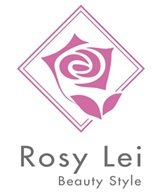
The examiner reasoned that:
- the wording “Beauty Style” in the cited mark could be extracted as the dominant element, and
- this element is identical to the applied mark “BeautyStyle.”
Based on this reasoning, the examiner concluded that the marks were similar.
3. Appeal to the JPO Trial and Appeal Board
An appeal was filed against the refusal.
- Appeal No.: 2025-4221
The appeal argued that the cited trademark should not be analyzed by isolating the words “Beauty Style.”
4. Decision of the Appeal Board
The JPO Appeal Board reversed the refusal.
The Board found that:
- The cited mark consists of a device element and textual elements, which may be visually separable.
- Within the textual portion, the wording “Rosy Lei” appears prominently in larger letters, while “Beauty Style” appears much smaller.
The Board further noted that:
- “Rosy Lei” creates a distinctive impression and meaning (“rose-colored lei”).
- In contrast, “Beauty Style” is relatively descriptive in relation to beauty services and therefore has weaker source-identifying power.
Accordingly, the Board concluded that the cited mark is primarily recognized by the element “Rosy Lei.”
5. Outcome
Because “Beauty Style” does not function as the dominant element of the cited mark, the Board rejected the examiner’s approach of isolating that wording.
As a result, the marks “BeautyStyle” and the cited composite mark were found not similar, and the refusal was cancelled.
The application was allowed to proceed toward registration.
Key Point for Foreign Applicants
This case highlights an important principle in Japanese trademark practice.
1. Dominant element analysis can work both ways
Examiners may attempt to isolate one element of a composite mark, but the JPO Appeal Board carefully evaluates which element actually creates the dominant commercial impression.
2. Descriptive wording often has weaker distinctiveness
Terms such as “Beauty Style” may be considered relatively weak when used in connection with beauty-related services.
3. The more distinctive element usually determines similarity
In this case, the distinctive element “Rosy Lei” was found to dominate the cited mark.
✅ Practical takeaway
Even if two marks share identical wording, similarity may still be rejected in Japan if that wording does not function as the dominant source-identifying element of the cited mark.
The cases presented here are based on publicly available JPO decisions and are provided for informational purposes only.