This case illustrates how the Japan Patent Office (JPO) evaluates similarity between stylized word marks.
It demonstrates that even minor differences in design or lettering may not avoid similarity if the overall impression and pronunciation are the same.
1. Application Details
- Mark: eri (stylized script)
- Application No.: Japanese Trademark Application No. 2023-36759
- Designated Services: Retail and wholesale-related services in Class 35, including services for clothing, footwear, bags, and related goods.

2. Refusal by the JPO Examiner
The application was refused under Article 4(1)(xi) of the Japanese Trademark Act (likelihood of confusion with prior registered trademarks).
The examiner cited the following earlier trademarks:
- Cited Mark 1:
- Registration No.: 4297821
- Designated Goods: Clothing and related goods in Class 25
- Cited Mark 2:
- Registration No.: 4341003
- Designated Goods: Bags and related goods in Class 18
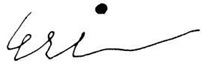
Both cited marks consist of the stylized word “Eri” in script form.
The examiner concluded that:
- the applied mark and cited marks share the same lettering (eri / Eri), and
- the differences in stylization are insufficient to distinguish them.
3. Appeal to the JPO Trial and Appeal Board
An appeal was filed against the refusal.
- Appeal No.: 2024-3320
The appeal challenged the similarity assessment, particularly the weight given to differences in stylization.
4. Decision of the Appeal Board
The JPO Appeal Board upheld the refusal.
The Board found that:
- Both marks consist of the same letters (eri / Eri) and are written in a similar handwritten style.
- Although there are minor differences (e.g., capitalization and decorative elements), the overall visual impression is similar.
The Board further noted that:
- The marks produce identical pronunciations (e.g., “eri”).
- Neither mark has a specific meaning, so conceptual comparison is neutral.
Taking these factors together, the Board concluded that:
- the marks create a similar overall impression and may cause confusion as to source.
5. Goods/Services Comparison
The Board also found that:
- retail services for clothing, footwear, and bags are closely related to
- the goods covered by the cited marks (clothing and bags),
because such goods and retail services are often provided by the same entities and share consumers and trade channels.
6. Outcome
The Board concluded that:
- the marks are similar, and
- the goods/services are also similar.
Accordingly, the refusal was maintained, and the application was not registrable.
Key Point for Foreign Applicants
This case highlights an important aspect of Japanese trademark practice.
1. Stylization differences are often insufficient
Minor differences in font, decoration, or capitalization may not avoid similarity.
2. Pronunciation carries strong weight
If two marks are pronounced the same, they are often considered similar.
3. Retail services can be similar to goods
Retail/wholesale services may be considered similar to the goods they handle.
✅ Practical takeaway
In Japan, trademarks may be considered similar even if they differ visually, where:
- the word elements are identical, and
- the pronunciation is the same, especially when goods and services are commercially related.
The cases presented here are based on publicly available JPO decisions and are provided for informational purposes only.